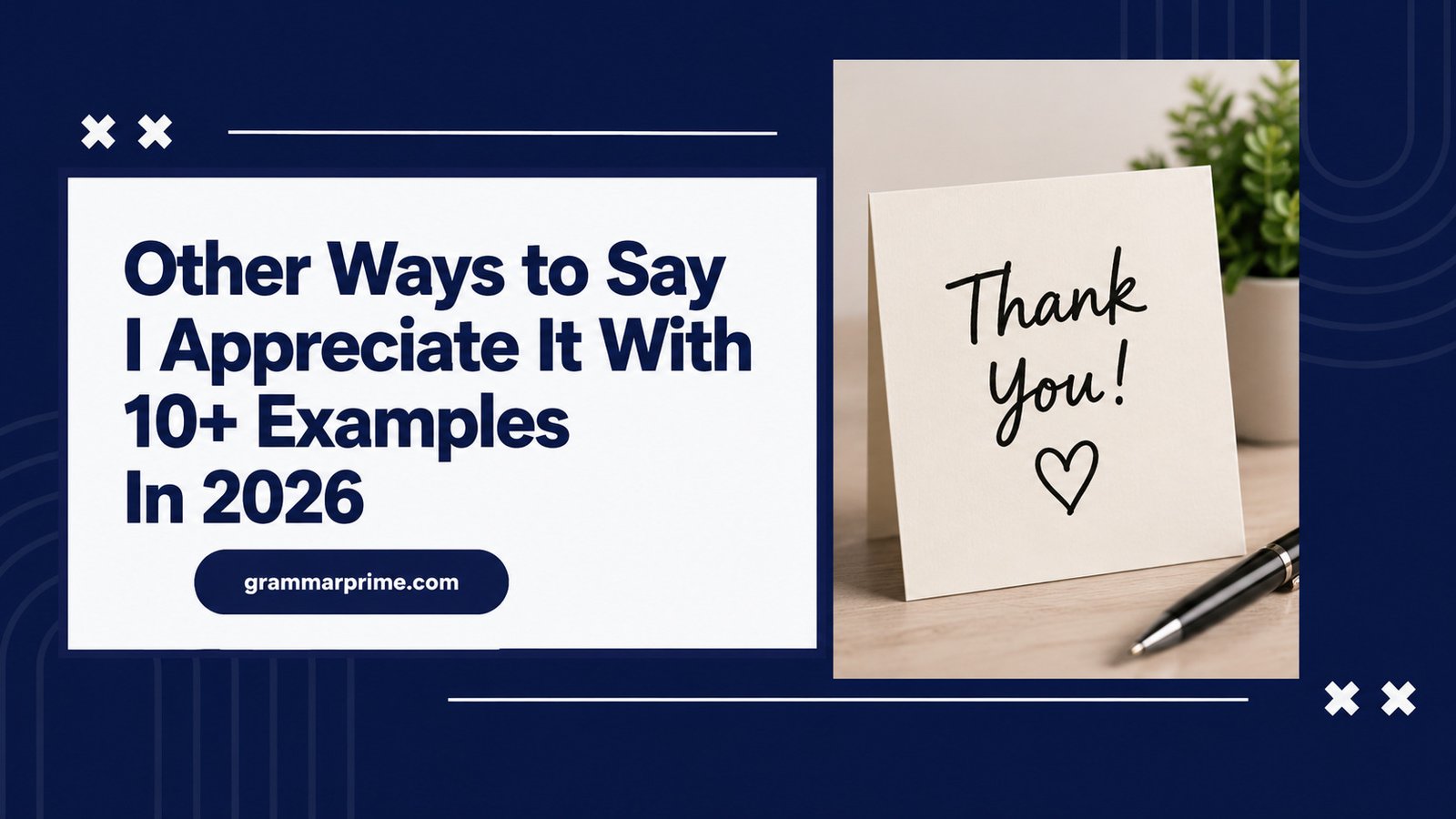
Other Ways to Say I Appreciate It With 10+ Examples In 2026
Saying “I appreciate it” is one of the easiest ways to show gratitude in English. It works in emails, conversations, and everyday messages. But when you use the same phrase over and over, your writing starts to feel flat. If you send the same line to your boss, your friend, and a client, none of them feel like you really meant it.
This guide breaks down more than ten alternatives to “I appreciate it,” grouped by tone, so you can pick the right words for the right moment. Whether you’re writing a formal email, thanking a coworker, or texting a friend, there’s a phrase here that fits.
Why “I Appreciate It” Needs Alternatives
“I appreciate it” is polite, but it’s also vague. It doesn’t say what you’re thankful for or how much it meant to you. Used sparingly, that’s fine. Used constantly, it can sound like a default response rather than a genuine one.
Having a few alternatives ready helps in three ways. First, it keeps your writing from sounding repetitive, especially in emails where you’re thanking several people for different things. Second, it lets you match your tone to the situation, since a quick thank you to a friend shouldn’t sound the same as a note to a client. Third, it shows a bit more thought, which people notice even if they can’t quite explain why.
Formal Ways to Say I Appreciate It
These work well in business emails, official letters, and situations where you want to sound polished and respectful.
1. Thank you for your assistance

This is a safe, professional choice for workplace emails. Example: Thank you for your assistance in finalizing the contract before the deadline.
2. I am grateful for your support
Slightly warmer than a plain thank you, but still formal enough for most business settings. Example: I am grateful for your support during the transition to the new system.
3. Much appreciated
Short and to the point, often used at the end of an email. Example: Please send the updated figures by Friday. Much appreciated.
4. I sincerely appreciate your help
Adds a bit of weight when someone has gone out of their way for you. Example: I sincerely appreciate your help in reviewing the proposal on such short notice.
5. Your effort has not gone unnoticed
A more descriptive way to acknowledge someone’s work without repeating “appreciate.” Example: The report was thorough and well organized. Your effort has not gone unnoticed.
Casual Ways to Say I Appreciate It
These fit better in texts, chats, and conversations with friends, family, or people you know well.
6. Thanks a lot
A common, friendly way to show gratitude without sounding stiff. Example: Thanks a lot for picking me up from the airport.
7. I owe you one

This adds a personal touch and suggests you’ll return the favor. Example: You covered my shift last minute. I owe you one.
8. That means a lot to me
Good for moments that feel more personal than transactional. Example: You remembered my birthday even though you were busy. That means a lot to me.
9. You’re a lifesaver
Works well when someone helped you out of a tough spot. Example: You fixed my laptop right before the deadline. You’re a lifesaver.
10. Couldn’t have done it without you
A warm way to acknowledge someone’s contribution without sounding formal. Example: We finished the project on time. Couldn’t have done it without you.
Professional and Workplace Alternatives
Between formal and casual, there’s a middle ground that fits most workplace conversations, including messages to coworkers or clients you know reasonably well.
11. I value your input
Useful when someone gave feedback, advice, or guidance. Example: I value your input on the marketing strategy; it helped shape the final plan.
12. Thanks for taking the time
Recognizes that someone’s time was the real gift, not just their effort. Example: Thanks for taking the time to walk me through the new software.
13. I appreciate you looking into this
Works well when someone investigated a problem or answered a question. Example: I appreciate you looking into this so quickly; it saved us a lot of back and forth.
Each of these phrases carries a slightly different weight, so it helps to think about who you’re speaking to before picking one. A quick note to a colleague doesn’t need the same formality as a message to a client you’ve never met in person.
How to Choose the Right Phrase
There isn’t one correct alternative to “I appreciate it.” The right choice depends on three things: your relationship with the person, the setting you’re writing or speaking in, and how significant the favor or gesture actually was.
For a small favor from a coworker, something simple like “thanks a lot” or “I value your input” usually fits. For a bigger gesture, especially in a professional context, phrases like “I sincerely appreciate your help” or “your effort has not gone unnoticed” carry more weight. And for personal relationships, phrases like “that means a lot to me” tend to sound more genuine than anything overly formal.
A good rule of thumb is to read the phrase out loud before using it. If it sounds like something you would actually say to that person, it’s probably the right fit.
Common Mistakes to Avoid
A few habits can undercut even the best gratitude phrases. Using the same expression in every message is the most common one, since repetition makes even sincere thanks feel automatic. Another is mismatching tone, such as sending “thanks a ton” in a formal client email or using stiff, formal language with a close friend.
It also helps to be specific when you can. Saying “thanks for your help” is fine, but saying “thanks for staying late to help me finish the presentation” shows you actually noticed what someone did.
Conclusion
Gratitude is one of those small things that can shape how people see you, both in writing and in conversation. Sticking to “I appreciate it” isn’t wrong, but having a handful of alternatives ready lets you match your words to the moment, whether that’s a quick thank you to a friend or a more considered message to a client.
Try picking two or three phrases from this list that feel natural to you and start working them into your everyday emails and conversations. Over time, it becomes second nature, and your thank-yous will start to sound like they actually mean something.
Frequently Asked Questions
Is “I appreciate it” too casual for professional emails?
No, it’s generally accepted in professional writing. That said, using a few alternatives like “much appreciated” or “I am grateful for your support” can help your emails feel less repetitive if you’re thanking multiple people in the same message.
What’s a good alternative for a boss or client?
Phrases like “I sincerely appreciate your help,” “thank you for your assistance,” or “your effort has not gone unnoticed” tend to work well in professional relationships where you want to sound respectful without being overly stiff.
Can I use casual phrases like “you’re a lifesaver” at work?
It depends on the workplace culture and how well you know the person. Among close coworkers or in informal team chats, it usually works fine. With clients or senior leadership, it’s safer to stick with more measured language.