TF Meaning in Text: Shocking Truth Revealed
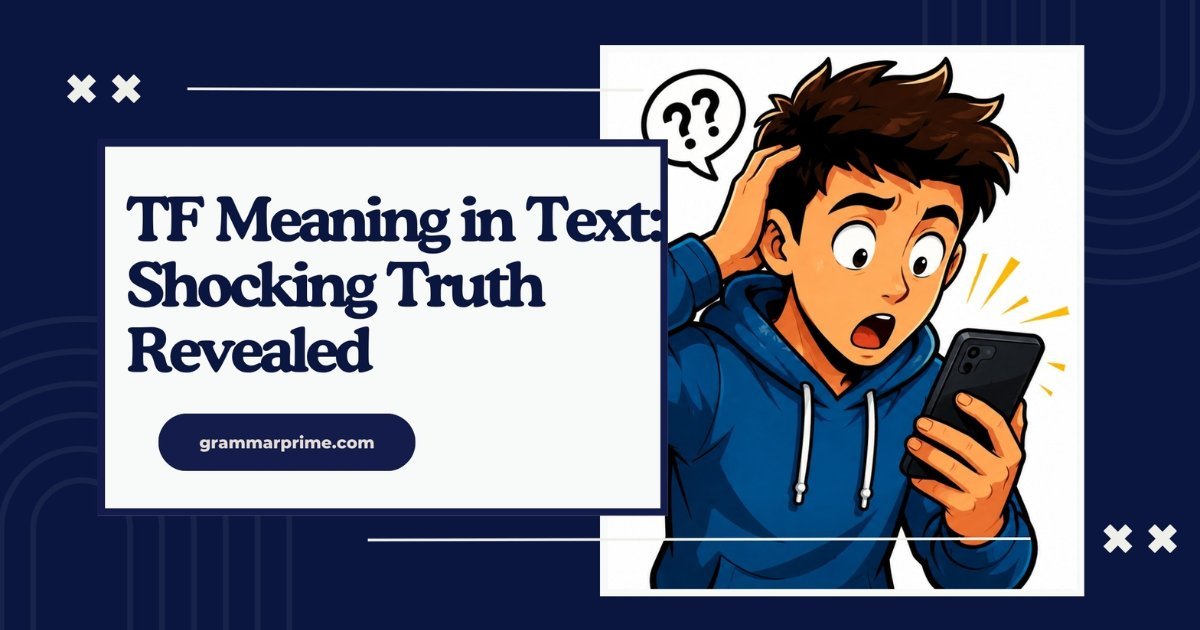
You’re scrolling through messages, and suddenly someone replies with just two letters: “TF?”
Wait… what?
If you’ve ever paused mid-conversation wondering what that even means, you’re not alone. Internet slang evolves fast, and keeping up can feel like learning a new language.
The tf meaning in text is one of those short, punchy abbreviations that can completely change the tone of a conversation.
Understanding it isn’t just about decoding letters. It’s about catching the emotion behind them — surprise, confusion, frustration, or even humor.
In today’s world of fast texting, gaming chats, and social media comments, knowing what “TF” means can help you avoid misunderstandings and respond confidently.
What Does TF Meaning in Text Mean?
The tf meaning in text usually stands for “the f*”** — with the second word being a strong swear word.
It’s commonly used to express:
- Surprise
- Confusion
- Frustration
- Disbelief
For example:
- “What tf just happened?
- “Why tf would you do that?”
- “How tf did you finish so fast?”
Notice something? It adds intensity to a question.
It’s not always meant to be aggressive. Sometimes it’s playful. Sometimes it’s shocked. The tone depends on context and the relationship between the people texting.
In simple words, “TF” is like turning the emotional volume up in a sentence.
Origin and Background of the Term
The abbreviation “TF” didn’t appear randomly.
It evolved during the early days of online chatrooms, SMS texting, and gaming platforms where character limits mattered. Typing full swear phrases took time, and internet culture loves speed. So people shortened “the f***” to just TF.
As social media platforms like Twitter (now X), Instagram, and online gaming communities grew, short slang terms became part of digital identity. “TF” became popular because it was:
- Quick to type
- Emotionally expressive
- Easy to understand in context
- Over time, it shifted from pure anger to general emphasis. Today, you’ll see it used casually among friends more than in serious arguments.
Language evolves. And “TF” is a perfect example of how digital communication reshapes everyday speech.
How TF Is Used in Daily Life
You’ll mostly see “TF” in informal digital conversations. Here’s how people use it daily:
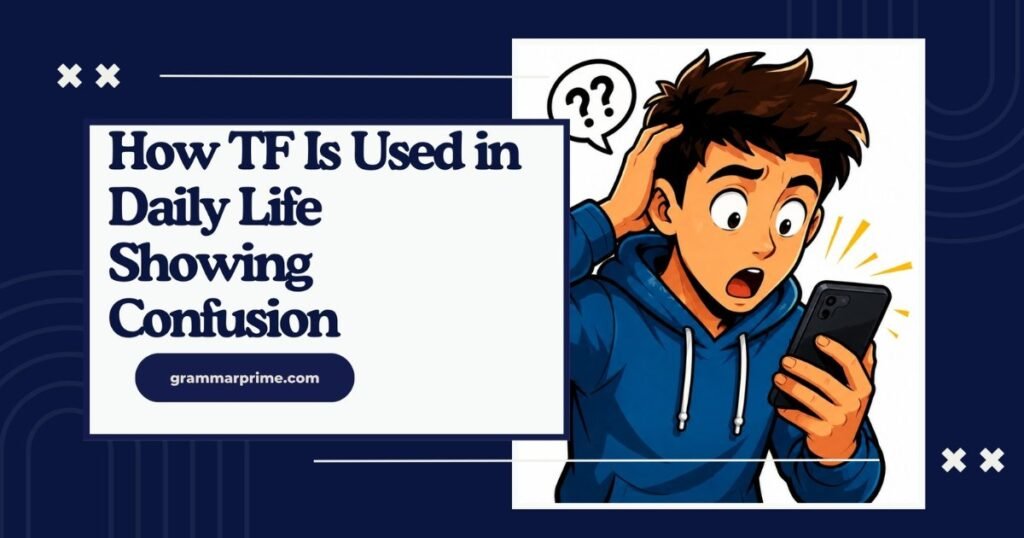
1. Expressing Shock
“TF?! That movie ending was inexplicable.”
2. Showing Confusion
“What tf are you talking about?”
3. Reacting to Drama
“Why tf is everyone fighting in the comments?”
4. Gaming Reactions
“How tf did he win that round?”
5. Friendly Teasing
“Where tf have you been? We missed you!”
6. Reacting to Prices
“$50 for coffee? TF?”
In real life, imagine your friend suddenly tells you they quit their job without warning. Your immediate response might be:
“Wait… what tf?”
It’s emotional. Instant. Unfiltered.
That’s the power of short slang.
Emotional or Practical Meaning of TF
Beyond its literal meaning, “TF” carries emotional weight.
It amplifies feelings.
When someone says, “What tf was that?” they aren’t just asking a question. They’re expressing:
- Shock
- Irritation
- Excitement
- Strong disbelief
In digital communication, tone is hard to detect. We don’t see facial expressions or hear voice pitch. So people use abbreviations like “TF” to inject emotion into plain text.
It’s like adding exclamation marks — but stronger.
Culturally, it reflects how modern communication is becoming shorter but more emotionally intense. People want to react fast and clearly. “TF” does that instantly.
Similar or Related Terms
Here are some related slang terms and how they differ:
- WTF – “What the f***.” Stronger and more direct than TF.
- OMFG – “Oh my f***ing God.” Expresses extreme shock.
- SMH – “Shaking my head.” Shows disappointment, not shock.
- LMAO – Laughing reaction, not confusion.
- BRUH – Casual disbelief, softer tone.
The key difference?
TF usually modifies a question, while others often stand alone as reactions.
Common Misunderstandings About TF Meaning in Text
Let’s clear up some confusion.
1. It Always Means Anger
Not true. It can be playful or joking among friends.
2. It’s Always Offensive
Context matters. Among close friends, it’s often harmless.
3. It’s Professional
Definitely not. Avoid it in work emails or formal chats.
4. It’s the Same as WTF
Not exactly. “WTF” is usually stronger and more confrontational.
5. Older People Don’t Use It
Actually, slang crosses age groups more than you’d think — especially on social media.
Understanding tone and context is everything.
Examples of TF in Sentences
Here are natural, everyday examples:
- “What tf is going on here?”
- “How tf did you solve that math problem?”
- “Where tf did my keys go?”
- “Why tf is this app not working?”
- “Who tf ate my leftovers?”
- “When tf did it start raining?”
- “Why tf are flights so expensive right now?”
- “How tf did you grow so fast?”
Notice how it always boosts emotion.
Without “TF,” the sentence sounds calmer.
With it? There’s fire in it.
Why Understanding TF Meaning in Text Matters Today
We live in a digital-first world.
Text messages, Instagram DMs, gaming chats, comment sections — communication happens fast. If you misunderstand slang, you might:
- Misread tone
- Overreact
- Feel confused
- Miss humor
Imagine someone jokingly says, “Where tf have you been?”
If you don’t understand the tone, you might think they’re angry.
Digital literacy isn’t just about using apps. It’s about understanding how language shifts online.
Knowing slang like “TF” helps you:
- Communicate confidently
- Avoid awkward moments
- Connect better with younger audiences
- Understand online culture
- Language is evolving. Staying informed keeps you socially sharp.
Origin and Usage of TF in Online Conversations
The term TF originated from casual internet slang and is a shortened form of a stronger phrase used to express shock or confusion. It became popular in online forums, gaming communities, and early chat rooms where short, quick reactions were common.
Over time, TF spread to mainstream platforms and everyday texting. Today, people use it in informal conversations with friends or online communities. Its usage depends on tone and relationship, as it can sound playful, serious, or even offensive if used incorrectly.
Read More: WYA Meaning in Chat
Conclusion
Understanding the meaning of “TF” in text conversations can greatly improve communication and help avoid misunderstandings. As explained, this abbreviation can have different meanings depending on the context and audience.
Staying updated on slang and texting trends is important in today’s digital world, where language is always changing. Whether someone is an experienced texter or new to online communication, being aware of these details helps people connect better with others.
FAQs:
What is a TF Used For?
A TF, or TensorFlow, is an open source machine learning framework developed by Google that is widely used for different applications in artificial intelligence.
What is TF in Furry Slang?
In furry slang, “TF” stands for “transformation.” This term is commonly used in the furry community to describe a change in form or appearance, often involving anthropomorphic characters.
What does TF Stand for in Gender?
In the context of gender, “TF” commonly stands for “transfeminine.” This term is used to describe individuals who were assigned male at birth but identify with femininity to different levels.
How is TF used in Online Chats?
In online chats, TF shows shock, confusion, or frustration, similar to saying “What the heck?” but with more intensity.